 For my annual project,i made pillars from Greece.I made it with my friends: Sheann, Nicho, Godewyn, Obert, Farabi and Ms.Coyet. We make it with recyclable materials: Styrofoam,Papers,Lamp box.:)
i was so tired that time,for the tug of war it was fun.we were in the 2nd place. My group members are: Me, Kayla, Sam, Farabi, Sheann , Raoul and Reynard. I love to play the puzzle sation with Ms.Coyet.i aranged the puzzles and i see that the picture was a water pollution, soil pollution, earth pollution.We were the first group who finished the puzzle so fast.well, that's all...thanks for reading ^^.
http://www.sciencedaily.com/releases/2012/03/120302210234.htm
Los Alamos National Laboratory scientists and an international research team have announced discovery of molecular oxygen ions (O2+) in the upper-most atmosphere of Dione, one of the 62 known moons orbiting the ringed planet. The research appeared recently in Geophysical Research Letters and was made possible via instruments aboard NASA's Cassini spacecraft, which was launched in 1997.
Dione -- discovered in 1684 by astronomer Giovanni Cassini (after whom the spacecraft was named) -- orbits Saturn at roughly the same distance as our own moon orbits Earth. The tiny moon is a mere 700 miles wide and appears to be a thick, pockmarked layer of water ice surrounding a smaller rock core. As it orbits Saturn every 2.7 days, Dione is bombarded by charged particles (ions) emanating from Saturn's very strong magnetosphere. These ions slam into the surface of Dione, displacing molecular oxygen ions into Dione's thin atmosphere through a process called sputtering.
Molecular oxygen ions are then stripped from Dione's exosphere by Saturn's strong magnetosphere.
A sensor aboard the Cassini spacecraft called the Cassini Plasma Spectrometer (CAPS) detected the oxygen ions in Dione's wake during a flyby of the moon in 2010. Los Alamos researchers Robert Tokar and Michelle Thomsen noted the presence of the oxygen ions.
"The concentration of oxygen in Dione's atmosphere is roughly similar to what you would find in Earth's atmosphere at an altitude of about 300 miles," Tokar said. "It's not enough to sustain life, but -- together with similar observations of other moons around Saturn and Jupiter -- these are definitive examples of a process by which a lot of oxygen can be produced in icy celestial bodies that are bombarded by charged particles or photons from the Sun or whatever light source happens to be nearby."
Perhaps even more exciting is the possibility that on a moon with subsurface water, such as Jupiter's moon Europa, molecular oxygen could combine with carbon in subsurface lakes to form the building blocks of life. Future missions to Europa could help unravel questions about that moon's habitability.
Two sensors aboard Cassini built by Los Alamos National Laboratory are expected to come into play beginning later this month, and again in April and May, when the Cassini spacecraft flies by the moon Enceladus. The moon is one of the brightest objects in our solar system, reflecting back nearly all of the sunlight that strikes it, thanks to a shimmering surface of snowy ice crystals. The moon also unleashes plumes ofmaterial from its south polar region. Los Alamos' ion-beam spectrometer and ion-mass spectrometer may help answer key questions about the composition of these plumes.
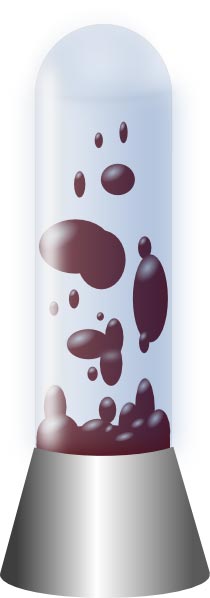
Learn how to make an easy
lava lamp with this fun science experiment for kids. Use simple
household items such as vegetable oil, food coloring, Alka-Seltzer and a
bottle to create chemical reactions and funky balls of color that move
around like a real lava lamp.
-Water
-A clear plastic bottle
-Vegetable oil
-Food coloring Alka
-Seltzer (or other tablets that fizz)
Instructions:
1.Pour water into the plastic bottle until it is around one quarter full (you might want to use a funnel when filling the bottle so you don't spill anything).
2.Pour in vegetable oil until the bottle is nearly full.
3.Wait until the oil and water have separated.
4.Add around a dozen drops of food coloring to the bottle (choose any color you like).
5.Watch as the food coloring falls through the oil and mixes with the water.
6.Cut an Alka-Seltzer tablet into smaller pieces (around 5 or 6) and drop one of them into the bottle, things should start getting a little crazy, just like a real lava lamp!
7.When the bubbling stops, add another piece of Alka-Seltzer and enjoy the show!
What's happening?
If
you've tried our oil and
water experiment you'll know that the two don't mix very well. The
oil and water you added to the bottle separate from each other, with oil
on top because it has a lower density than water. The food coloring
falls through the oil and mixes with the water at the bottom. The piece
of Alka-Seltzer tablet you drop in after releases small bubbles of
carbon dioxide gas that rise to the top and take some of the colored
water along for the ride. The gas escapes when it reaches the top and
the colored water falls back down. The reason Alka-Seltzer fizzes in
such a way is because it contains citric acid and baking soda (sodium
bicarbonate), the two react with water to form sodium citrate and carbon
dioxide gas (those are the bubbles that carry the colored water to the
top of the bottle).
Adding more
Alka-Seltzer to the bottle keeps the reaction going so you can enjoy
your funky lava lamp for longer. If you want to show someone later you
can simply screw on a bottle cap and add more Alka-Seltzer when you need
to. When you've finished all your Alka-Seltzer, you can take the
experiment a step further by tightly screwing on a bottle cap and
tipping the bottle back and forth, what happens then?
1. What is the name of the biggest part of the human brain?
|
||||||||||||||||||||
2. The colored part of the human eye that controls how much light passes through the pupil is called the?
|
||||||||||||||||||||
3. What is the name of the substance that gives skin and hair its pigment?
|
||||||||||||||||||||
4. The muscles found in the front of your thighs are known as what?
|
||||||||||||||||||||
5. True or false? The two chambers at the bottom of your heart are called ventricles.
|
||||||||||||||||||||
6. What substance are nails made of?
|
||||||||||||||||||||
7. What is the human body’s biggest organ?
|
||||||||||||||||||||
8. The innermost part of bones contains what?
|
||||||||||||||||||||
9. True or false? An adult human body has over 500 bones.
|
||||||||||||||||||||
10. How many lungs does the human body have?
|
||||||||||||||||||||
11. Another name for your voice box is the?
|
||||||||||||||||||||
12. The two holes in your nose are called?
|
||||||||||||||||||||
13.
Your tongue is home to special structures that allow you to experience
tastes such as sour, sweet, bitter and salty, what is their name?
|
||||||||||||||||||||
14. The bones that make up your spine are called what?
|
||||||||||||||||||||
15. The shape of DNA is known as?
|
||||||||||||||||||||
16. The flow of blood through your heart and around your body is called?
|
||||||||||||||||||||
17. The bones around your chest that protect organs such as the heart are called what?
|
||||||||||||||||||||
18. What is the name of the long pipe that shifts food from the back of your throat down to your stomach?
|
||||||||||||||||||||
19. True or false? Your ears are important when it comes to staying balanced.
|
||||||||||||||||||||
20. The outside layer of skin on the human body is called the?
|


